

Let's be real – we've all been there. Standing in front of the mirror, brush in hand, facing down a tangle that looks like it could house a small bird. Whether your hair is pin-straight, beautifully wavy, or gorgeously curly, finding the right detangling brush can feel like searching for a needle in a haystack. But here's the thing: not all detangling brushes are created equal, and what works for your best friend's hair might be completely wrong for yours.
The truth is, your hair type isn't just about how it looks – it's about how it behaves, how it tangles, and most importantly, how it needs to be treated. Today, we're diving deep into the world of detangling brushes to help you find your perfect match, because trust us, when you find the right one, it's a total game-changer.
Understanding Your Hair's Unique Needs
Before we jump into specific recommendations, let's talk about why hair type matters so much when it comes to detangling. Each hair texture has its own personality, if you will. Straight hair tends to show oil more quickly but tangles differently than curly hair. Wavy hair often fights between wanting to curl and wanting to lay flat, creating its own unique challenges. And curly hair? Well, curly hair has its own beautiful, complex relationship with tangles that requires a completely different approach.
The key is understanding that detangling isn't just about getting knots out – it's about preserving your hair's natural texture, minimizing breakage, and maintaining the health of your strands from root to tip.
Straight Hair: The Need for Gentle Precision
If you're blessed with straight hair, you might think detangling is a breeze, but straight hair comes with its own set of challenges. Because straight hair lies flatter against the scalp, oils from your roots travel down the hair shaft more easily, which means your hair can look greasy faster. But it also means your hair is often more delicate than it appears.
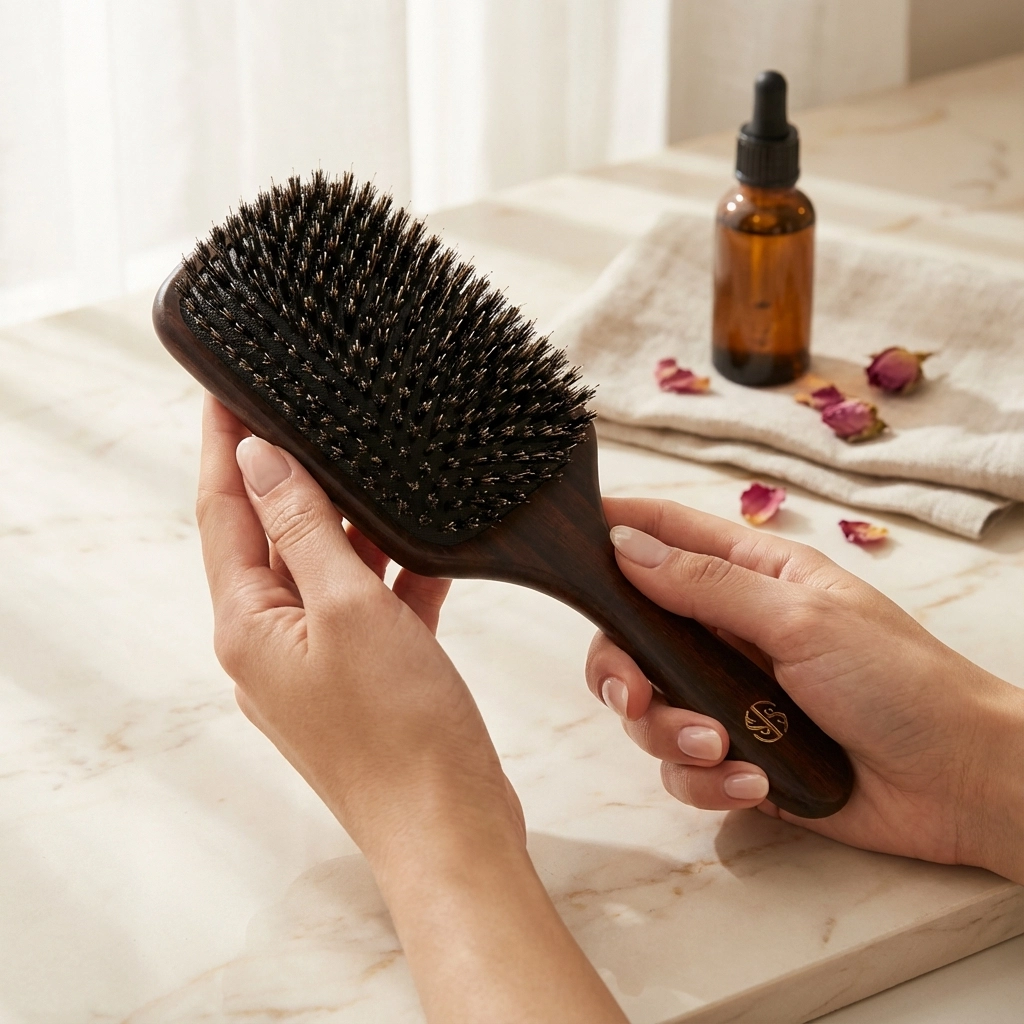
For straight hair, paddle brushes with flexible bristles are your best friend. These brushes have a flat, wide surface that allows you to cover more ground quickly while being gentle on your strands. The flexible bristles bend and flex as they move through your hair, reducing the pulling and tugging that can lead to breakage.
Look for brushes with mixed bristle types – a combination of nylon and natural boar bristles works wonders for straight hair. The nylon bristles handle the detangling, while the boar bristles distribute your scalp's natural oils from root to tip, giving you that enviable glossy finish that straight hair is known for.
When detangling straight hair, always start from the ends and work your way up. This technique prevents you from pushing tangles down the hair shaft, which can make them tighter and harder to remove. And here's a pro tip: if your hair is particularly fine, try detangling when it's slightly damp (not soaking wet) with a leave-in conditioner for extra slip.
Wavy Hair: Finding the Balance
Wavy hair is probably the most misunderstood hair type out there. It's not straight enough for straight hair products, but not curly enough for curly hair products. If you have wavy hair, you know the struggle of trying to enhance your natural waves without turning them into a frizzy mess.
The best detangling brushes for wavy hair feature flexible, widely-spaced bristles that can navigate the bends and curves of your wave pattern without disrupting it. Avoid brushes with tightly-packed bristles, as these can break up your wave clumps and create frizz.
Wide-tooth combs and paddle brushes with flexible pins work beautifully for wavy hair. Some of the newer brush designs feature what's called "two-tiered technology" – longer bristles that detangle and shorter bristles that smooth. This combination is perfect for wavy hair because it addresses both detangling and frizz control in one step.
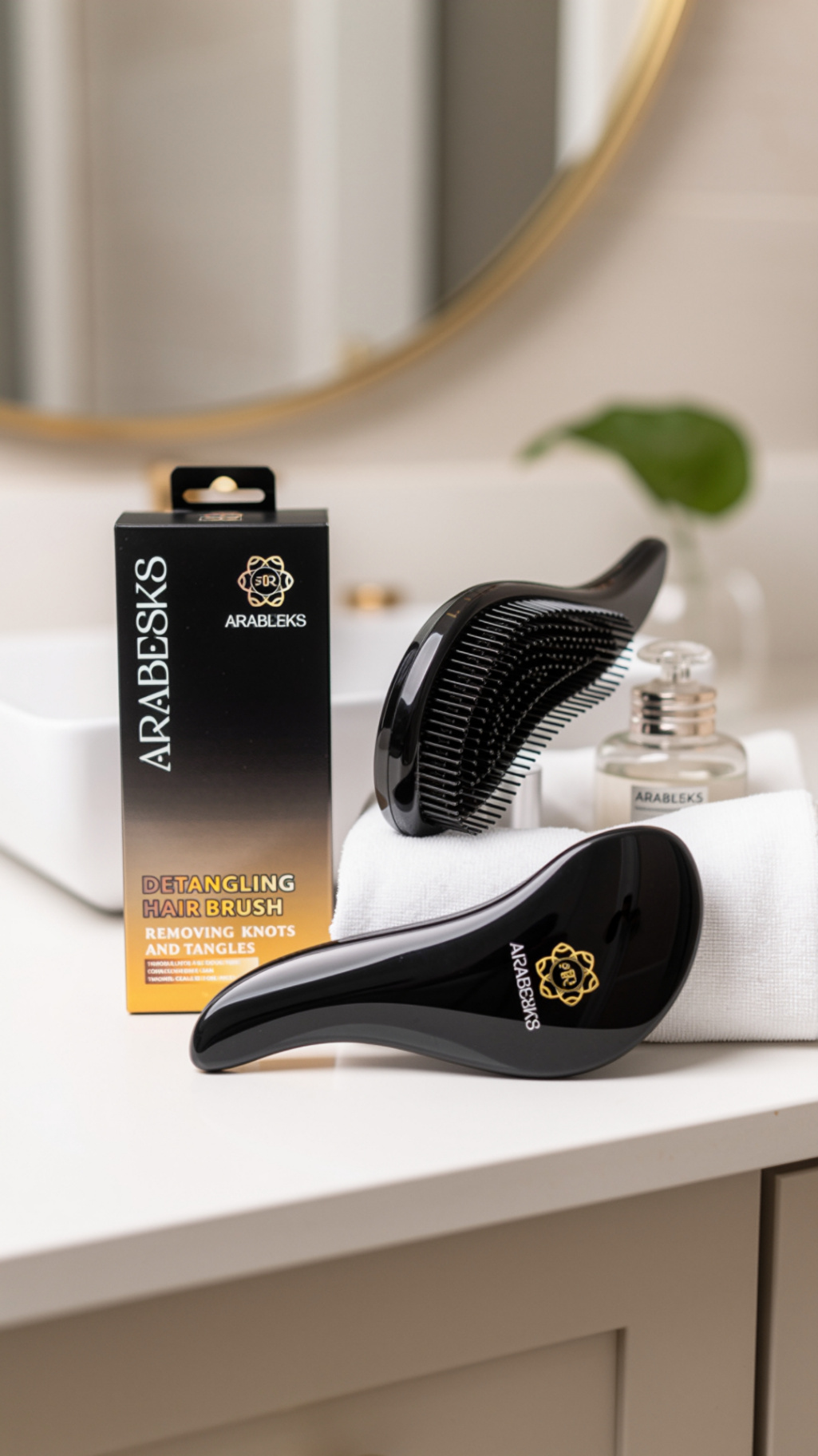
For wavy hair, the timing of when you detangle is crucial. Many wavy-haired people find success detangling in the shower with a wide-tooth comb while their hair is saturated with conditioner. Others prefer to detangle dry hair before washing. Experiment to see what works best for your particular wave pattern.
Curly Hair: Embracing the Coil
If you have curly hair, you already know that traditional brushing advice goes out the window. Curly hair has a completely different structure than straight or wavy hair – the curves and bends in each strand create natural weak points where breakage can occur. This means curly hair needs extra gentle handling and specialized tools.
The golden rule for curly hair? Never, ever brush it when it's dry (unless you're going for an intentional fluffy, voluminous look). Curly hair should be detangled when it's wet and loaded with conditioner or a detangling product.
For curly hair, look for brushes specifically designed with curls in mind. These usually feature very flexible bristles that are spaced far apart, allowing them to glide through curls without catching or snagging. The Denman brush has been a curly hair favorite for decades because of its ability to define curl clumps while detangling.
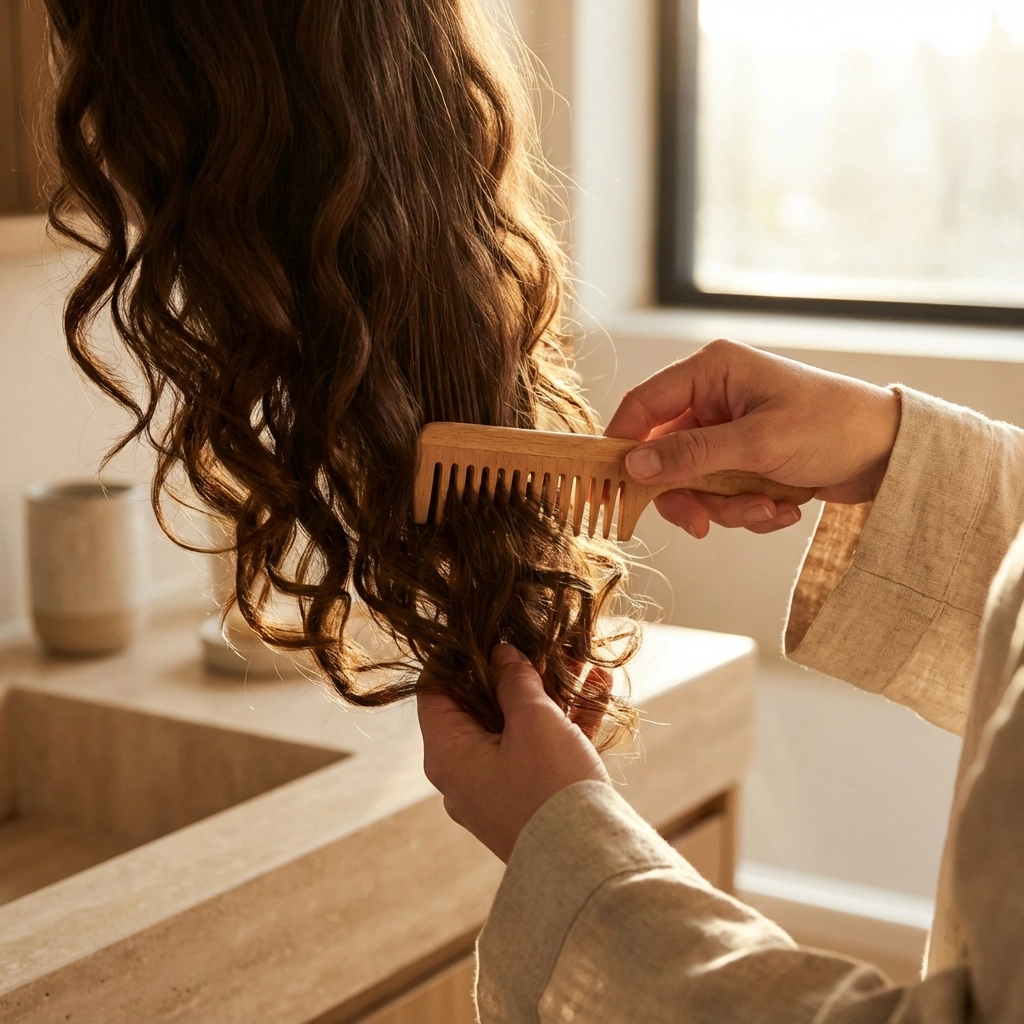
Some curly-haired people prefer to skip brushes altogether and use their fingers or a wide-tooth comb for detangling. This gives you ultimate control and allows you to feel exactly what's happening with your hair. However, a good curl-specific detangling brush can be a huge time-saver and help create more uniform curl definition.
The ARABESKS Advantage: One Brush for All
Here's where things get interesting. While we've been talking about different brushes for different hair types, what if we told you there's a brush designed to work beautifully across all hair textures? The ARABESKS Detangling Brush features an innovative design that adapts to whatever hair type you throw at it.
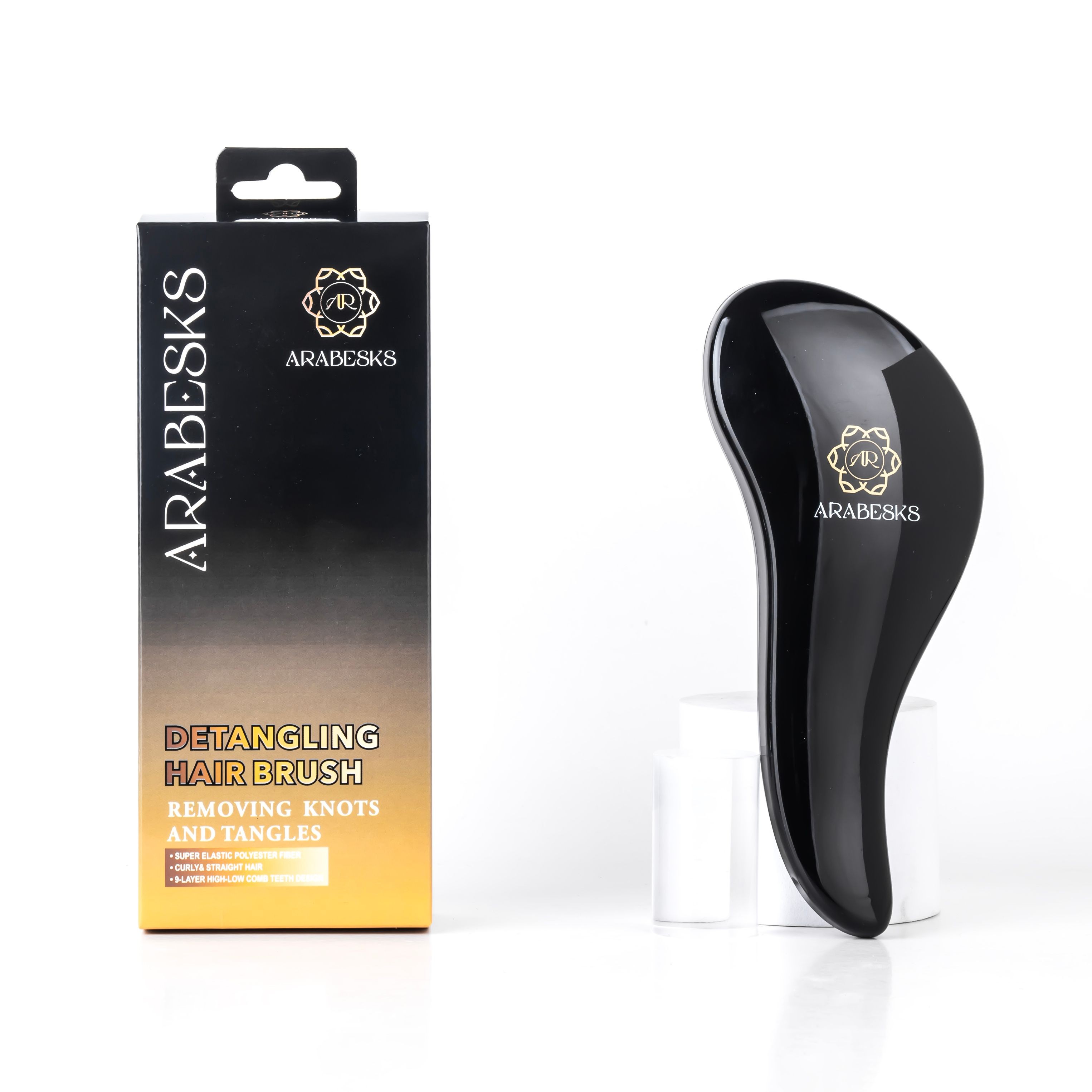
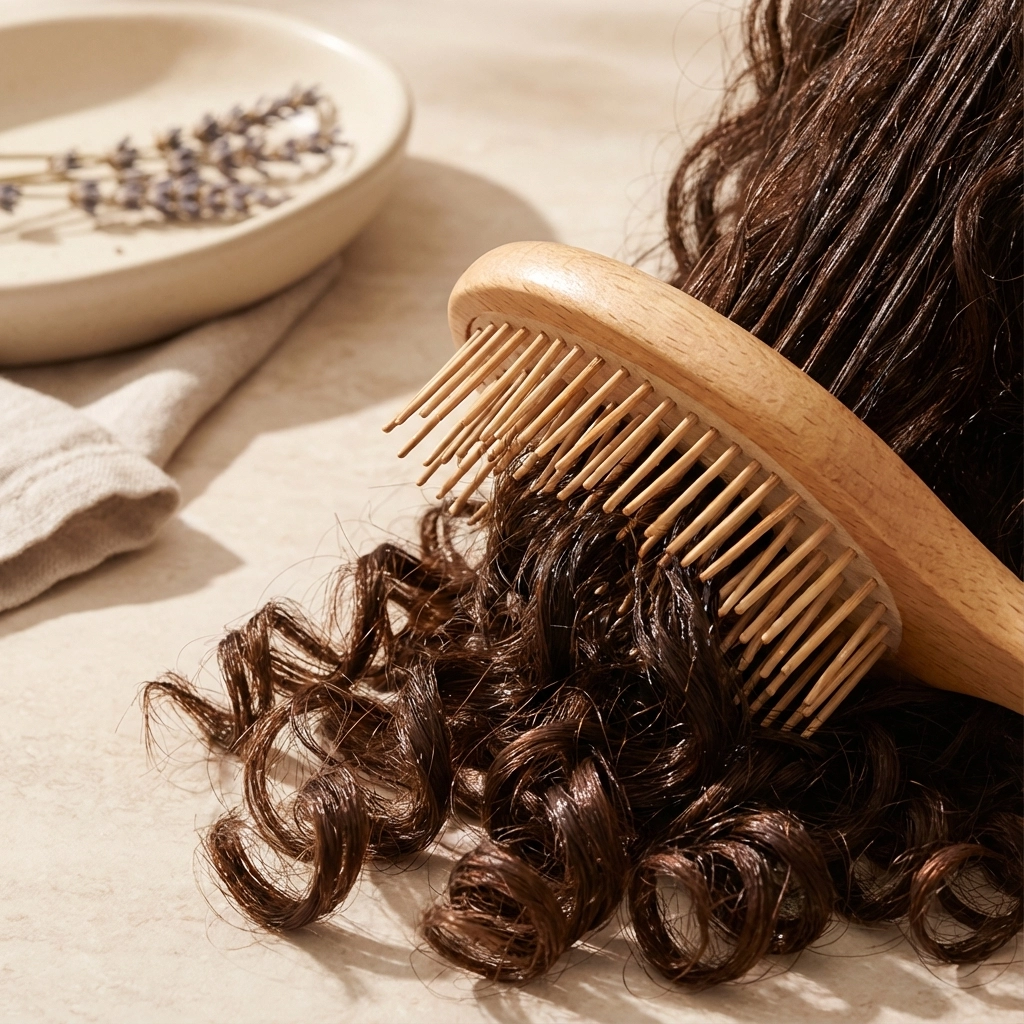
What makes this brush special is its multi-level comb teeth design. The varying heights of the bristles mean that longer bristles can reach through and detangle deeper knots, while shorter bristles smooth the hair surface and reduce frizz. It's like having multiple brushes in one tool.
The super elastic polyester pins are flexible enough to work through curly hair without disruption, yet firm enough to efficiently detangle straight hair. The ergonomic handle makes it comfortable to use, whether you're doing a quick touch-up or a thorough detangling session.
But perhaps the best feature is its versatility – you can use it on wet or dry hair, making it perfect for those in-between moments when you need to refresh your style or tackle an unexpected tangle.
Proper Detangling Technique: The Foundation of Healthy Hair
No matter what hair type you have or which brush you choose, proper technique is everything. Here are the universal rules of detangling that apply to everyone:
Start at the ends, always. This cannot be emphasized enough. Starting from the roots and brushing down pushes tangles toward the ends, making them tighter and more difficult to remove. Begin about 2-3 inches from the ends and work your way up gradually.
Section your hair. Especially if you have thick or long hair, trying to detangle everything at once is a recipe for frustration and breakage. Divide your hair into manageable sections and work through them one at a time.
Use a detangling product. Whether it's leave-in conditioner, a dedicated detangling spray, or just water, having some slip in your hair makes the process infinitely easier and less damaging.
Be patient. Rushing through detangling is the fastest way to cause breakage. Take your time, especially with stubborn knots.
Listen to your hair. If you're meeting a lot of resistance, stop and reassess. You might need more product, a different angle, or to break the section down even smaller.
When to Replace Your Detangling Brush
Even the best detangling brush won't last forever. Signs it's time for a replacement include bristles that have lost their flexibility, bristles that are falling out regularly, or a brush that no longer glides smoothly through your hair. Generally, a good quality detangling brush should last 6-12 months with regular use.
The Bottom Line
Finding the right detangling brush for your hair type isn't just about convenience – it's about hair health. The right brush can mean the difference between hair that breaks and hair that thrives, between a routine that's a chore and one that feels like self-care.
Whether you have straight hair that needs gentle precision, wavy hair that requires balance, or curly hair that demands specialized care, there's a detangling brush out there that's perfect for you. And with innovations like the ARABESKS Detangling Brush bridging the gap between hair types, you might just find that one brush can handle all your detangling needs.
Remember, healthy hair starts with how you treat it every single day. Investing in the right tools and taking the time to understand your hair's unique needs isn't vanity – it's self-care. Your hair carries you through every day, every adventure, every important moment. Don't you think it deserves the best care you can give it?
Your perfect detangling brush is out there waiting for you. The question isn't whether you'll find it, but how much healthier and happier your hair will be once you do.